
A good fish fillet knife can make preparing a fresh catch much easier. The right blade follows the backbone, works around the rib cage, and separates skin from flesh without wasting too much meat. The wrong one can make the same job frustrating, especially when you’re working with delicate fish or a slippery cutting board.
If you’re searching for the best fish fillet knife, start with the type and size of fish you prepare most often. A short blade offers better control for smaller fish, while a longer, flexible blade is useful for larger fillets. Handle design, steel quality, and ease of sharpening also deserve attention.
This guide explains what to look for, compares a relevant product option, and helps you decide which type of knife makes sense for your fishing trips or home kitchen.
Best Fish Fillet Knife: Quick Buying Guide
For most people who want a manual fish fillet knife, a narrow blade with controlled flexibility and a secure handle is a sensible starting point. Choose the blade length according to the fish you prepare rather than assuming that the longest or most expensive knife is automatically the best.
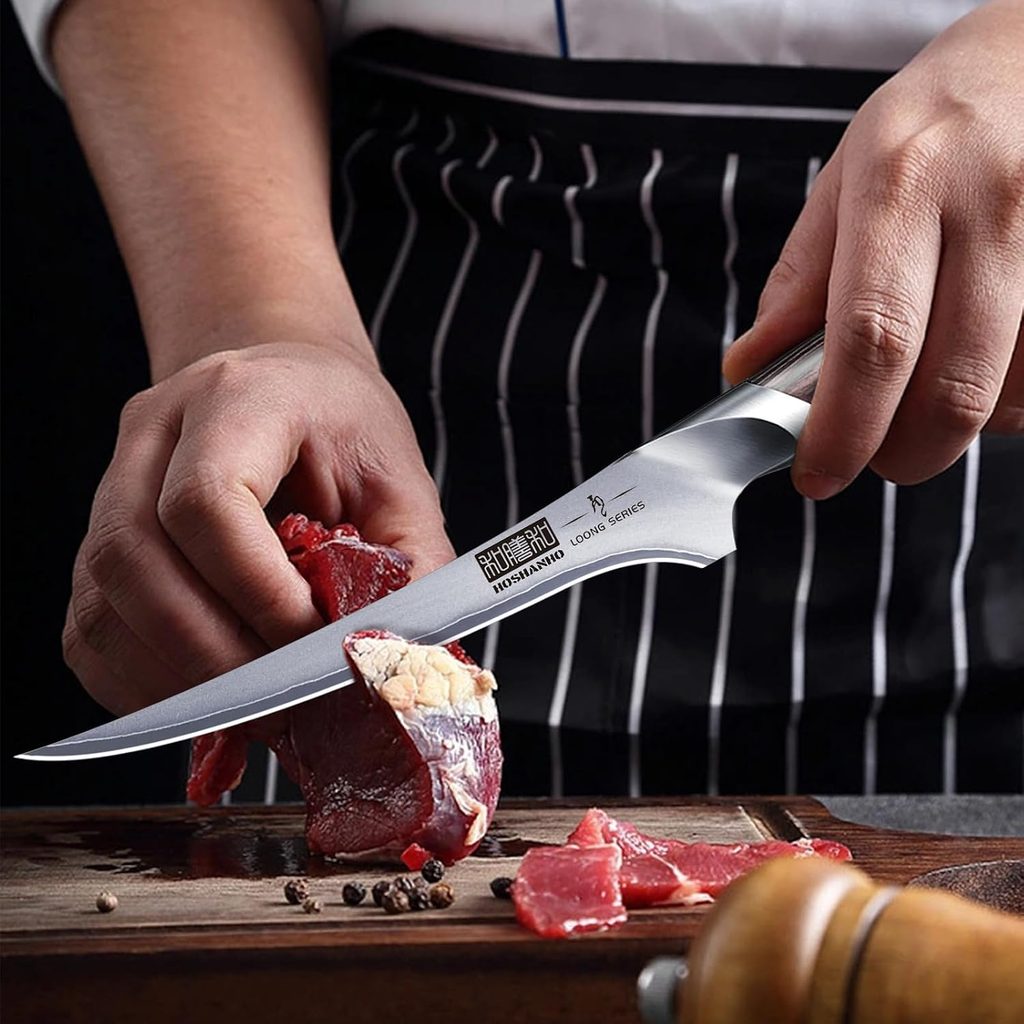
Here are the main features to compare before buying:
- Blade length: Shorter blades offer control on smaller fish; longer blades help with larger fillets.
- Flexibility: A flexible blade follows the backbone and rib cage more easily.
- Handle grip: A textured, comfortable handle helps maintain control when your hands are wet.
- Blade material: Stainless steel is a practical option for fish preparation, although corrosion resistance varies by steel and finish.
- Maintenance: Look for a knife you can clean, dry, sharpen, and store safely.
- Accessories: A protective sheath and a compatible sharpener can be useful for anglers who clean fish outdoors.
Our Recommended Fish Fillet Knife
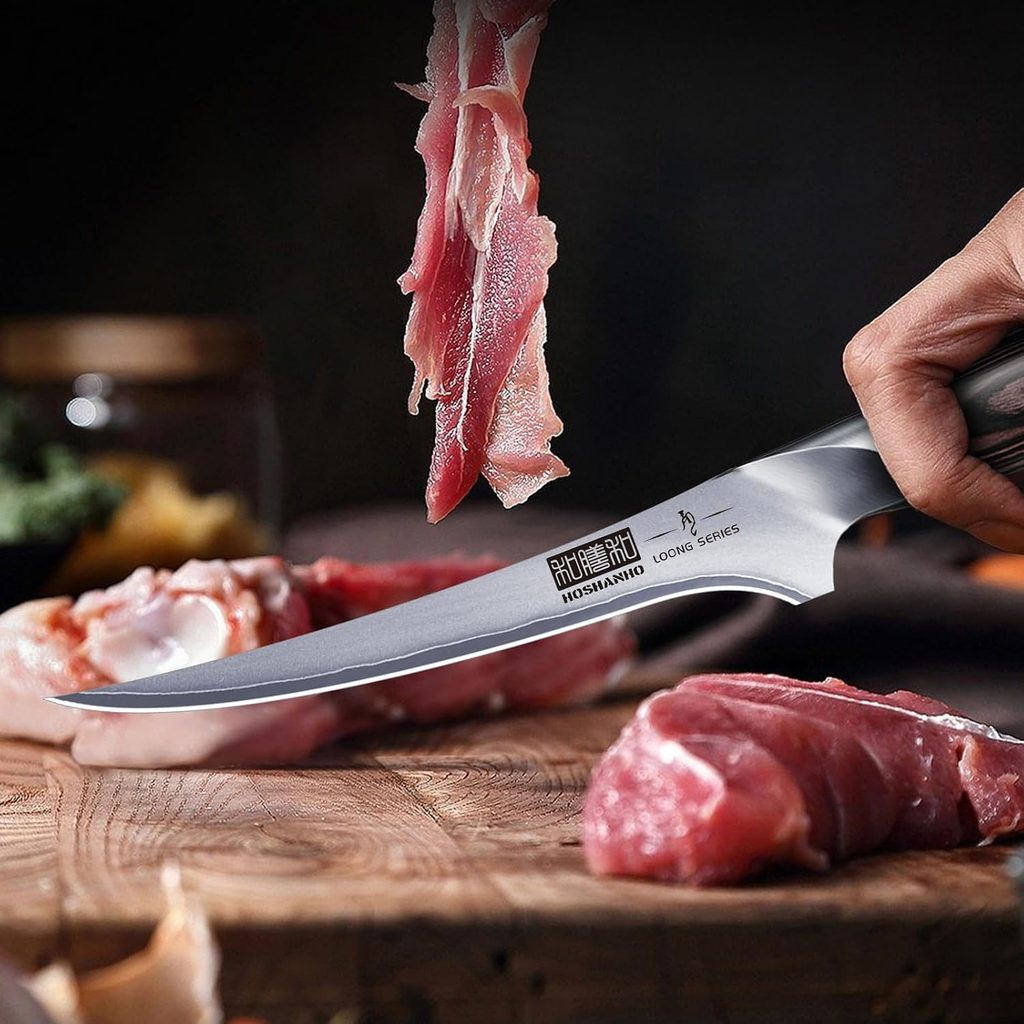
HOSHANHO 7-Inch Fillet Knife
Best for: Buyers looking for a Japanese-style 7-inch fish fillet knife.
The HOSHANHO 7-inch Fillet Knife is one option to consider if you want a narrow blade for fish preparation and other delicate cutting tasks. Its listed product description identifies a high-carbon stainless-steel blade and a handle designed for kitchen use.
A 7-inch blade can be a practical middle ground for someone who prepares a mixture of small and medium-sized fish. However, blade flexibility and handle comfort should be checked against your needs before purchasing.
What to consider
- The 7-inch length may suit a range of everyday fish-preparation tasks.
- High-carbon stainless steel still requires appropriate cleaning and drying.
- Confirm the handle material, blade flexibility, and included accessories on the current product listing.
- Do not assume that a kitchen-oriented fillet knife is ideal for every fishing or saltwater environment.
Check the current product listing: https://link.amazon/B0efS77AI
Editorial note: This is a product-specification-based recommendation, not a claim that we independently tested the knife.
How to Choose the Best Fillet Knife for Your Needs
1. Match the Blade Length to the Fish
Blade length affects control and the length of each cutting stroke. A blade that is too short for a large fish may require repeated strokes, while a very long blade can feel awkward when working on a small fish.
| Blade length | Typical use |
| 4–6 inches | Trout, panfish, and other small fish |
| Around 7 inches | General-purpose fish preparation and many medium-sized fish |
| 8–9 inches | Larger fish and long cuts through broad fillets |
These are general guidelines, not strict rules. Fish size, blade shape, and your experience all affect which length works best.
If you regularly prepare different species, a medium-length blade may be a useful starting point. If you usually clean large salmon or similarly sized fish, consider a longer blade that can make smooth, continuous cuts.
2. Choose the Right Amount of Flexibility
Flexibility is one of the most important characteristics of a fish fillet knife.
A flexible blade can follow the curves of a fish’s backbone and rib cage. This helps when separating flesh from the frame or removing skin. A stiffer blade offers more resistance and control for certain trimming tasks but may be less convenient for delicate filleting.
Consider your typical use:
- Small, delicate fish: Look for a blade that provides precise control.
- General fish cleaning: A balanced level of flexibility is often useful.
- Large fish: Consider a longer blade with enough control to make smooth strokes.
More flexibility is not always better. A blade that bends too readily for your technique can be difficult to guide accurately.
3. Look for a Secure, Comfortable Handle
Fish preparation often involves water, scales, and slippery surfaces. A comfortable handle that remains secure in wet conditions is therefore more than a cosmetic feature.
Before buying, examine the handle’s shape, texture, and overall fit. Rubberized or textured handles can offer useful grip, but the actual design matters more than the material name alone.
If you clean fish outdoors, look for a knife that is easy to control with wet hands and comes with a suitable protective sheath.
4. Understand Blade Steel and Corrosion Resistance
Stainless steel is widely used in fish-preparation knives because it can resist corrosion better than many untreated steels. However, stainless steel is not completely rustproof.
The steel grade, blade finish, heat treatment, and maintenance routine all influence performance. A premium-sounding material name does not automatically mean that a knife will stay sharper longer or produce cleaner fillets.
After use, wash the knife according to the manufacturer’s instructions, dry it thoroughly, and store it safely. If you fish in saltwater, rinse away salt residue promptly and pay particular attention to the blade and handle joints.
5. Manual or Electric: Which Is Better?
A manual fillet knife is usually a straightforward choice for anglers who value portability, control, and easy storage. It does require more physical effort and regular sharpening.
An electric fillet knife can be useful if you routinely clean many fish in one session. It reduces repetitive hand movements but introduces additional considerations, including power, blade maintenance, cleaning, and safe storage.
Choose based on how frequently you prepare fish rather than buying an electric model simply because it appears more advanced.
Common Mistakes to Avoid When Buying a Fish Fillet Knife
Choosing by price alone: A low price can be attractive, but a poor handle or unsuitable blade may make the knife frustrating to use.
Buying the longest blade available: Longer blades are not automatically better. Match the length to the fish you prepare.
Ignoring grip: A knife that feels comfortable when dry may be harder to control with wet hands.
Expecting one knife to do every job: Filleting, portioning thick fish steaks, and cutting through heavy bones are different tasks. A thin fillet blade is not designed to force its way through large bones.
Neglecting maintenance: Even a quality knife needs appropriate cleaning, drying, sharpening, and storage.
Overlooking the product details: Before ordering, check the current listing for blade length, materials, included accessories, warranty information, and return conditions.
How to Fillet Fish More Cleanly
The knife matters, but technique matters too. A suitable blade cannot compensate for rushed cuts or an unstable work surface.
- Place the fish on a stable, non-slip cutting board.
- Make the initial cut behind the gill area, following the fish’s anatomy.
- Guide the blade along the backbone with controlled strokes.
- Keep the blade close to the bones without forcing it through them.
- Separate the fillet carefully, then remove the skin if required.
- Check for remaining pin bones and remove them with suitable fish tweezers.
- Wash and dry your knife according to its care instructions.
Always cut away from your body when practical, keep your free hand clear of the blade’s path, and avoid trying to catch a falling knife.
Frequently Asked Questions
What is the best fish fillet knife for beginners?
A manual knife with a comfortable, secure handle and a blade length suited to the fish you prepare is a good starting point. Many beginners find a medium-length blade easier to manage than an unusually long one.
What size fillet knife is best for most fish?
A blade around 6–7 inches is a reasonable starting point for many small and medium-sized fish. Larger species may benefit from a longer blade.
Is a flexible or stiff fillet knife better?
A flexible blade is generally useful for following the backbone, working around ribs, and removing skin. A stiffer blade can offer more control for some trimming tasks. The best choice depends on the fish and the type of cut.
Are Japanese fillet knives worth buying?
They can be worth considering if the blade design, handle, materials, and price fit your needs. Compare actual specifications and maintenance requirements instead of choosing solely because a knife is marketed as Japanese.
Can I use a fillet knife for salmon?
Yes. A suitable fillet knife can be used to separate salmon flesh from the backbone and skin. Choose a blade long enough for the fish and comfortable to control throughout the cut.
How do I keep a fish fillet knife from rusting?
Clean and dry the knife promptly after use, follow the manufacturer’s care instructions, and store it in a dry place. Saltwater users should rinse away salt residue carefully.
Is an electric fillet knife better than a manual knife?
Neither is universally better. Manual knives offer simplicity and precise control, while electric models can reduce effort when processing many fish. Consider workload, portability, cleaning, and maintenance.
Final Verdict
The best fish fillet knife is the one that matches your fish, technique, and working conditions. Blade length, controlled flexibility, handle security, and ease of maintenance are more useful buying criteria than price or marketing claims alone.
If you’re considering the HOSHANHO 7-inch model, review its current specifications and make sure its blade design suits the fish you prepare. Compare alternatives before purchasing, and choose a knife you can handle confidently and maintain properly.